The Grid Got Cleaner. The Roads Didn't.
In 2023, for the first time in Colorado's history, cars and trucks became our biggest source of greenhouse gas emissions. Not because all our catalytic converters were stolen, but because we finally cleaned up our electric grid enough that electricity dropped to second place.[1]
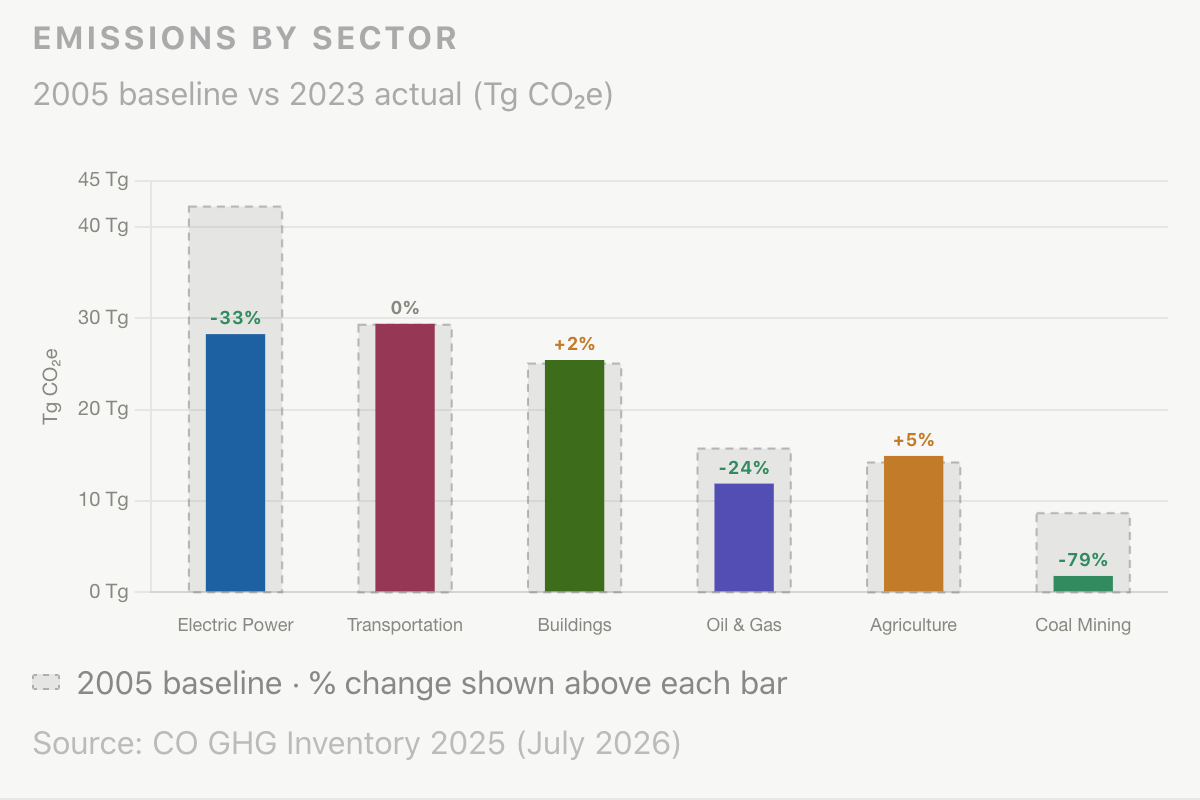
The state has legally mandated itself to bring down emissions from its 2005 baseline. As part of the law, there is increased data tracking which allows us visibility into what is and isn't working. Colorado's greenhouse gas emissions break across five major subsectors inside the Energy sector: electric power, transportation, buildings, oil and gas, and coal mining. Each one tells a different story. Where the state got serious about enforcement, emissions fell. Where it didn't, they didn't.
Electricity Generation
Here is the clearest climate win. Electric power generation emissions have been reduced by over 33%.[1] Since 2008 our state regulators and legislature have been pushing our utilities toward the early retirement of Colorado's coal power plants. The Colorado Public Utilities Commission (PUC), the regulatory body that approves what Xcel and other utilities can build and charge ratepayers for, has been the enforcement mechanism behind most of these retirements, approving increasingly aggressive clean energy plans and rejecting proposals that kept coal burning too long.[4][5] This also drove a 79% reduction in Colorado's coal mining emissions as the mines closed alongside the plants they supplied.[1]
At the same time, the dramatic fall in the cost of solar and wind power over the last decade made it economically rational for utilities to comply. Colorado has more than enough abundant sunshine and a moderate amount of wind along the eastern plains to harvest. Building new renewables has become clearly cheaper than keeping aging coal plants running.[3]
The regulations are working so well that our electric utilities are on track to hit our 2030 regulatory targets, although Trump is trying to keep our remaining coal plants open. Stay tuned.[4]
Transportation
Unfortunately, transportation emissions are unchanged from 2005 to 2023 (the last year we have measurements). After eighteen years of policies and work, we moved from 29.3 to 29.4 million metric tons.[1] Gasoline emissions fell a bit (from cleaner ICE cars and the small amount of EVs we have) but diesel pollution from the trucking and freight shipping industry is just getting worse.[1]
The state legislature has tried to take action on the problem but has been stymied from any measurable progress. To further drive down gas emissions, in 2019 Colorado adopted the California vehicle emission standards (which go farther than the federal requirements), but the Trump administration repealed the waiver. So we're back on the looser national tailpipe rules.[6][7]
Another seemingly big win at the time was to force the Colorado Department of Transportation (CDOT) to model and limit emissions from all their infrastructure projects. The idea being that they had to show how they would reduce vehicle miles traveled (VMT) whenever they rebuilt a bridge or added lanes to a highway. This has proved to be totally inadequate as CDOT can fudge their numbers to claim that less traffic congestion on the roads somehow means that less pollution is being generated. And there is no regulatory stick to wave at the highway builders to get them to take emissions more seriously.[8]
Finally, Colorado has tried to throw tax credits at consumers to get them into EVs but adoption remains well below their rosy targets. In fact, EV purchases are slowing nationwide as Trump's tariffs keep new car costs high and the elimination of the $7,500 federal EV tax credit removed the most direct consumer incentive.[6]
There has also been some effort from the governor and Democrats in the state house to push for more transit ridership to meet our VMT reduction goals. In a cash-strapped state (thanks TABOR!) it is just too hard to find the billions of dollars needed to really connect the state with high frequency trains and fast buses.[7]
The electricity transition happened because the state set clear targets, the PUC enforced them, and falling renewable costs made compliance economically rational. Transportation has none of those three things working together. The targets exist but the enforcement is weak, the market incentives just got gutted federally, and CDOT is still building highways. Until those conditions change, transportation emissions will stay roughly where they are, which means Colorado's biggest emitter is also its biggest unresolved problem heading into 2030.[1][2]
Next: The sector nobody expected Colorado to get right, and the two sectors nobody's trying very hard to fix.
- [1]2025 Colorado GHG Inventory, Chapter 2: Trends in Historical and Projected Emissions (July 2026)
- [2]Colorado Sun: Colorado greenhouse gas cuts falling behind (Dec 2025)
- [3]Westword: EPA Clean Power Plan Repeal Unlikely to Reverse Big Plans in Colorado (2017)
- [4]Xcel Energy Colorado Clean Energy Plan
- [5]Global Energy Monitor: Coal plant retirements — Colorado
- [6]Southwest Energy Efficiency Project: Colorado transportation GHG reduction
- [7]CPR News: Colorado could miss first climate goal (Nov 2023)
- [8]Colorado Carbon Reduction Strategy (CDOT)
Written by Evan Frasz · Colorado Current